
Gutter assessment
What a Houston gutter contractor looks at first
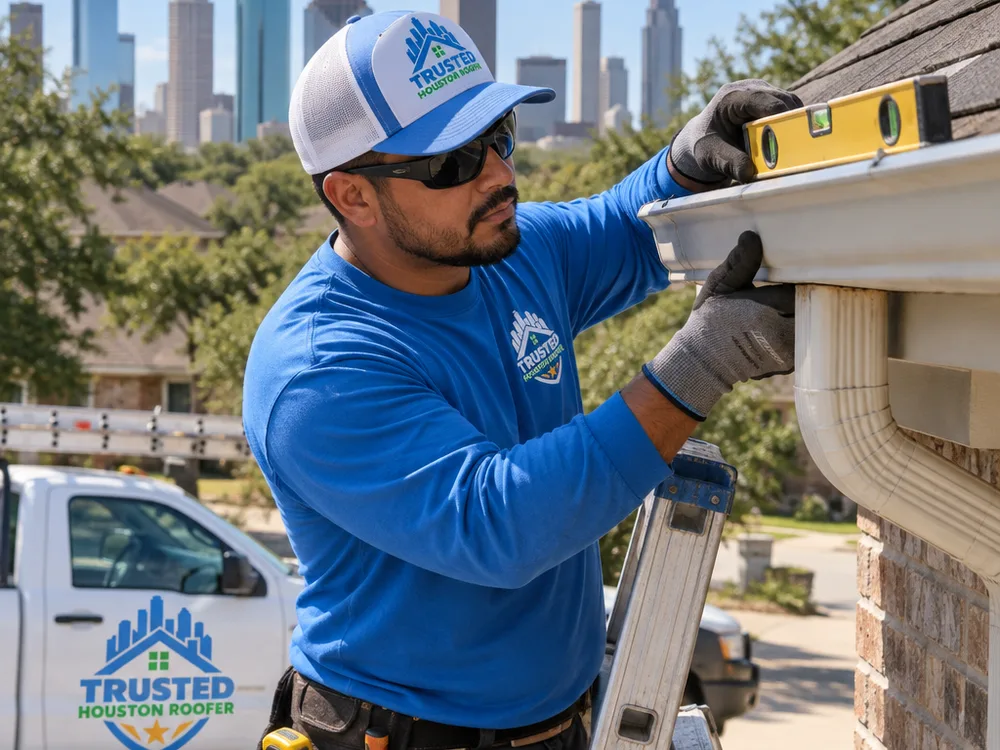
When someone searches gutters Houston Texas, they usually want one thing: rainwater moved off the roof and away from the house without staining, erosion, or leaks.
A local contractor will typically start with the basics that decide whether you need a repair, a partial replacement, or a full new run:
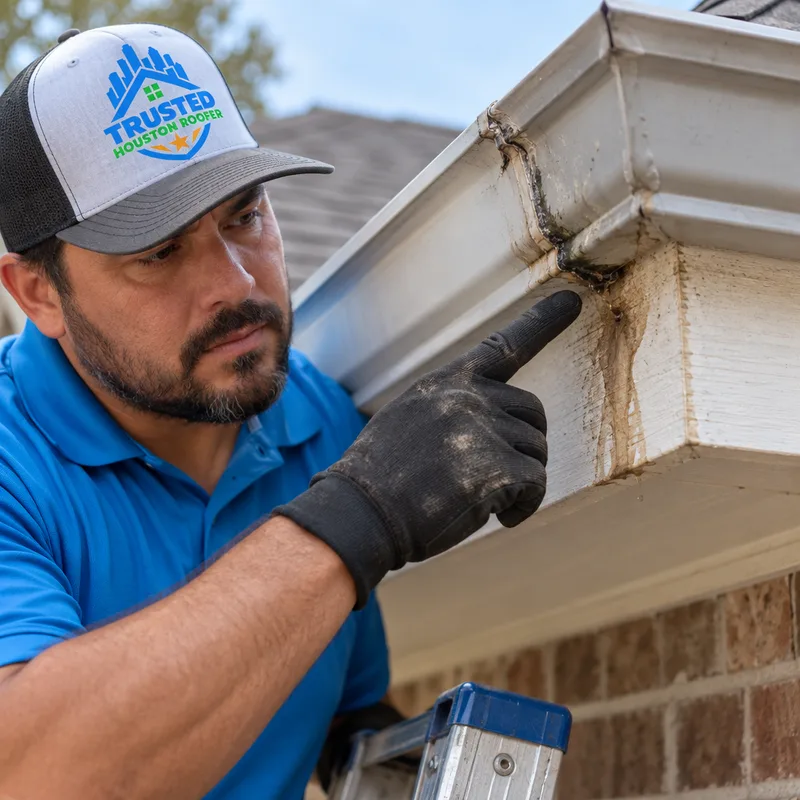
- Roof edge and drip edge: Water should land in the gutter, not behind it. If drip edge is missing or bent, runoff can get behind the fascia and rot the wood.
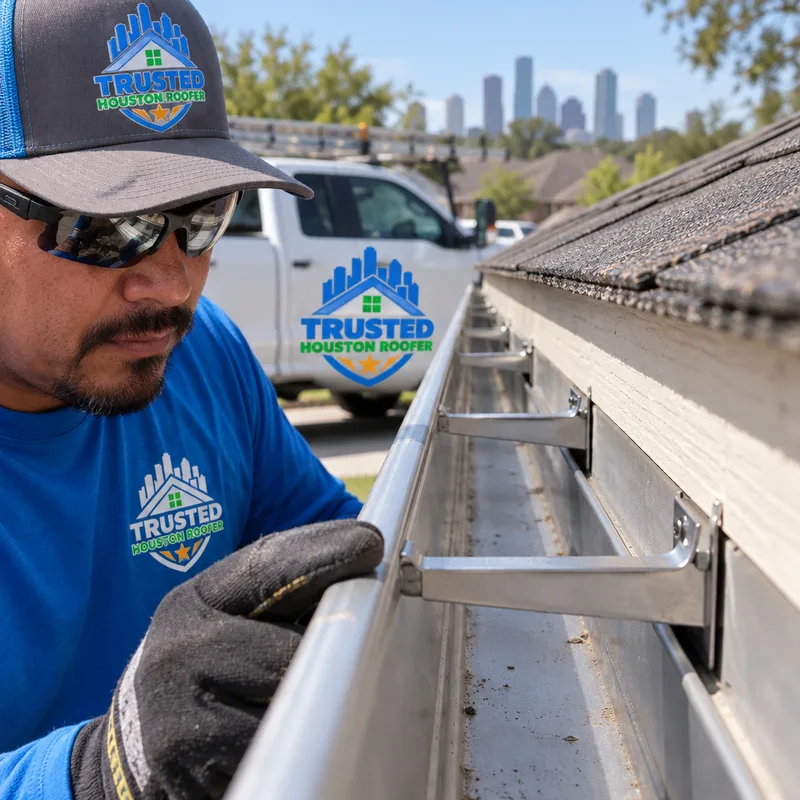
- Pitch and hangers: Gutters need consistent slope to the downspouts. Loose hidden hangers, separated seams, and sagging sections are common sources of overflow.
- Downspout capacity and discharge: A gutter can be fine but still fail if downspouts are too few, undersized, or dumping water right at the foundation. Contractors look at where the water exits and whether extensions or different routing is needed.
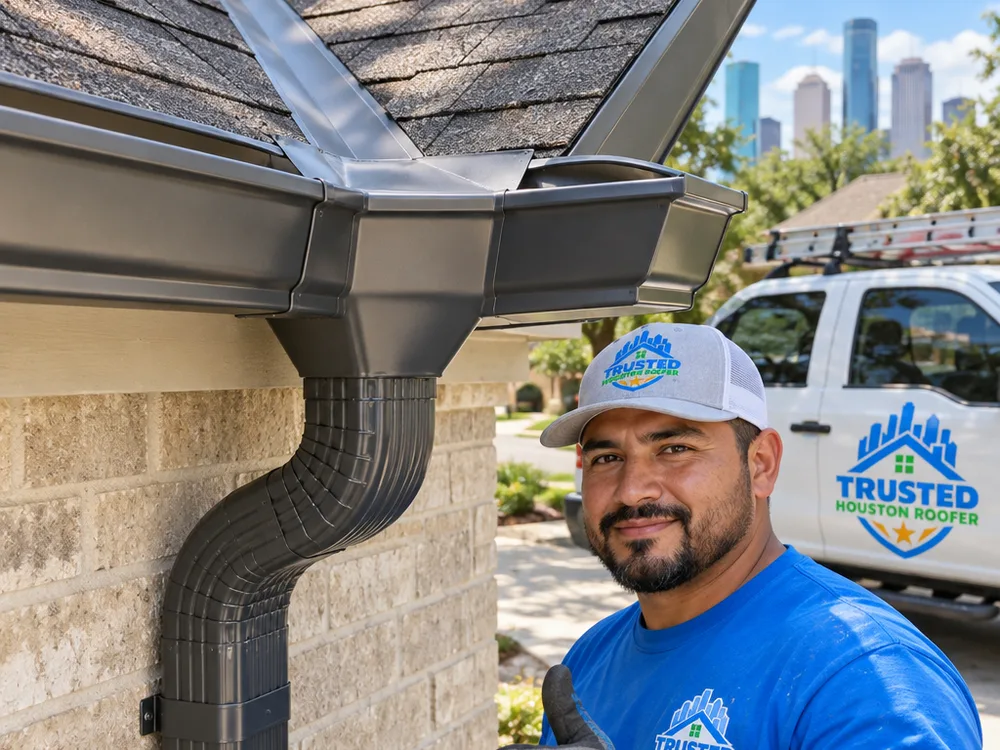
- Valley and roof geometry: Valleys and steep roof planes concentrate flow. Those spots often need larger gutters, additional downspouts, or guards designed for high-volume runoff.
- Connection points and penetrations: In Houston's sudden downpours, small gaps at end caps, corners, and drop outlets show up quickly as drips and staining.
Houston also has long stretches of humidity and heavy rain events. That combination makes clogged systems show their problems fast: water backing up under shingles at the eave, fascia softening, and mildew streaking on siding. If you're also weighing roof work, it helps to think of gutters as part of the edge system; a contractor can coordinate measurements and tie-ins with roofing in Houston TX.