Residential roof decisions
Finding the right residential roofer in Houston starts with the right questions
If you're searching for Houston residential roofing contractors, you're usually trying to solve two problems at once: the roof issue itself, and the hassle of figuring out who can take the job. Trusted Houston Roofer is a referral service. When you call, we take the details and connect you with an independent local contractor who works on residential roofing in Houston, TX.
What Houston homeowners usually call about
Residential roofing in Houston ranges from small repairs to full replacements. A contractor may be needed for:
- Active leaks such as stains on ceilings, dripping at vents, or wet drywall.
- Missing, lifted, or creased shingles after wind.
- Granule loss showing up in gutters, downspouts, or at splash blocks.
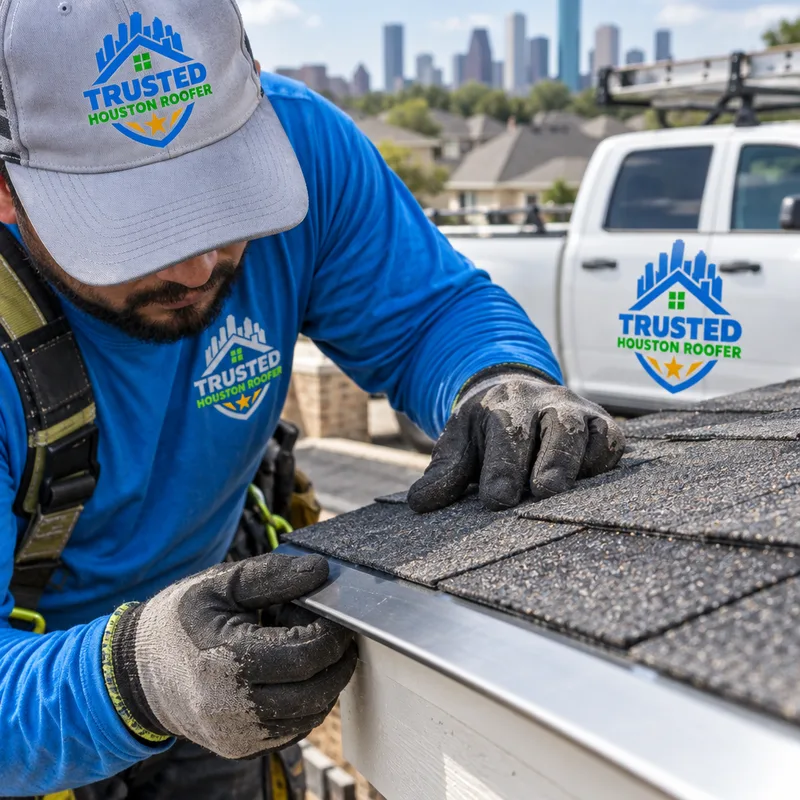
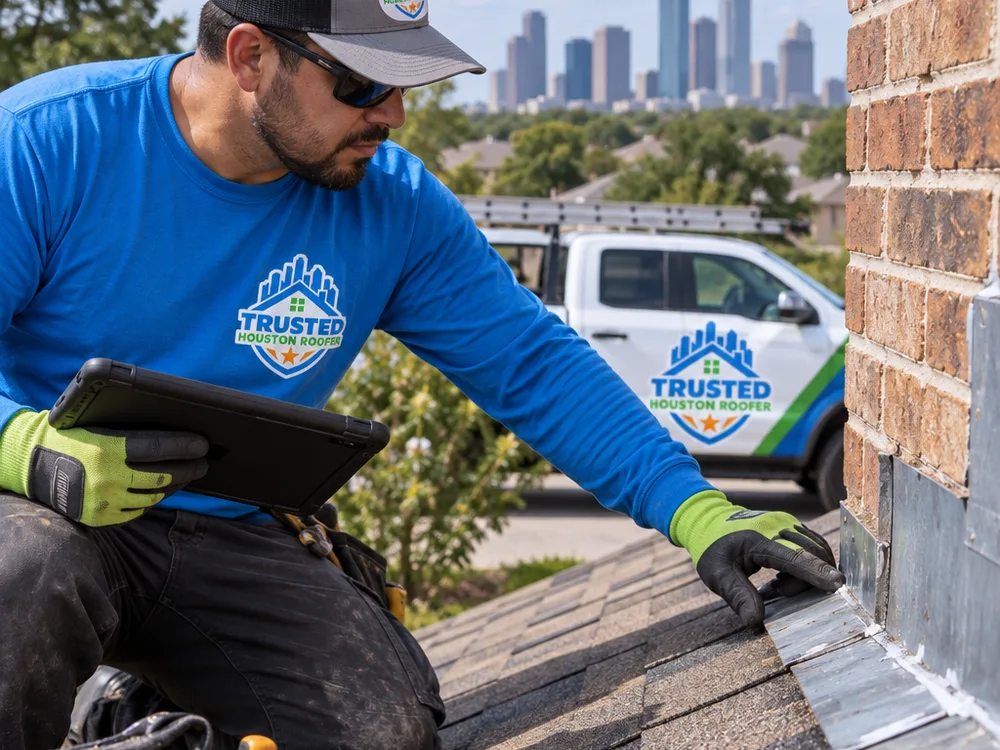
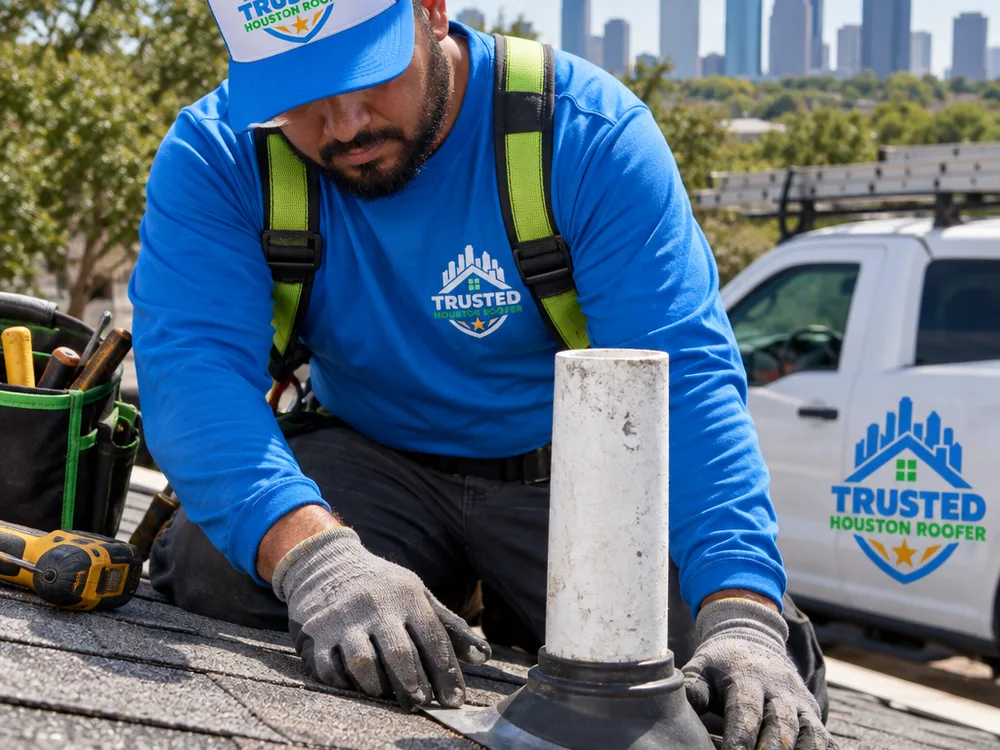
- Flashing problems at chimneys, plumbing vents, skylights, and wall transitions.
- Soft spots in the deck, which can indicate trapped moisture.
- Age-related wear where multiple areas are failing at once.
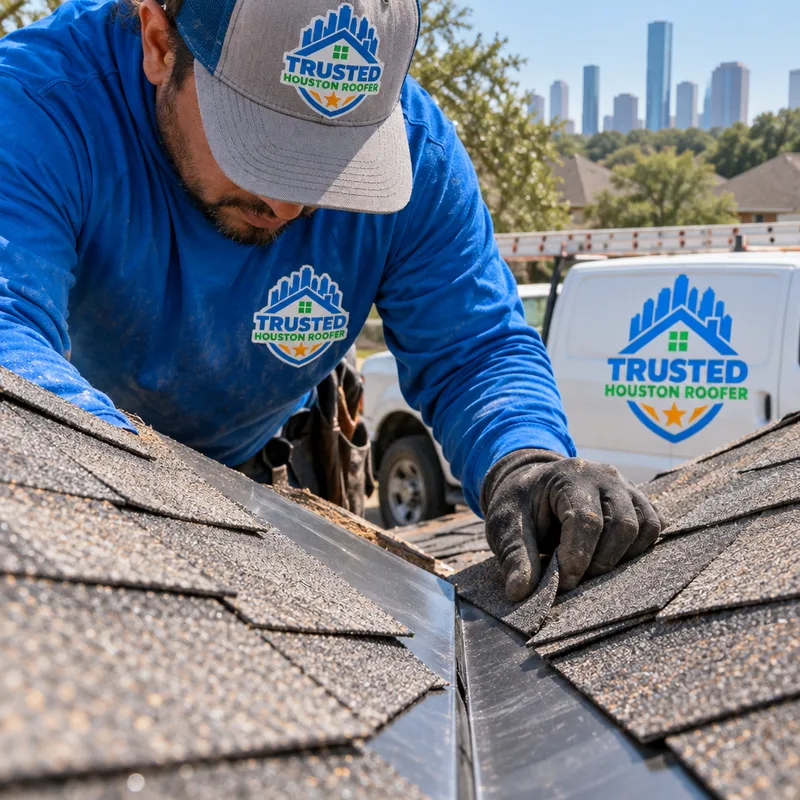
Houston's mix of heavy rain, high humidity, and storm cycles makes water management details matter. On a residential roof, the weak points are often the transitions: valleys, penetrations, step flashing at sidewalls, and the drip edge and underlayment at the eaves.
What a residential roofing contractor should check first
A residential roofing contractor in Houston, TX typically starts by separating symptoms from causes. Expect a contractor to look at:
- Leak tracing: The interior stain may be downhill from where water enters the roof.
- Flashing and seal points: Pipe boots, counterflashing, kickout flashing, and exposed fasteners.
- Underlayment and decking condition: Especially around valleys, eaves, and prior repair areas.
- Attic clues: Wet insulation, staining on rafters, and ventilation balance.
- Workmanship from older installs: Nail placement, shingle alignment, starter strips, and drip edge details.
When you call, it helps to describe what you're seeing, what kind of roof you have—such as asphalt shingles, tile, metal, or low-slope—and whether the issue followed a specific storm.
If you're comparing broader options across roof work types, reviewing the common categories can help you get familiar with the terms before discussing details with the contractor.