Tracing water entry
What a Houston roof leak check looks for
A roof leak in Houston rarely shows up directly under the actual opening. Water can travel along decking, rafters, nail lines, and insulation before it stains a ceiling. A good leak check starts by treating the roof and attic as one system: where water gets in, how it moves, and where it finally appears.
Here's what the roofer you're connected with will typically look at first:
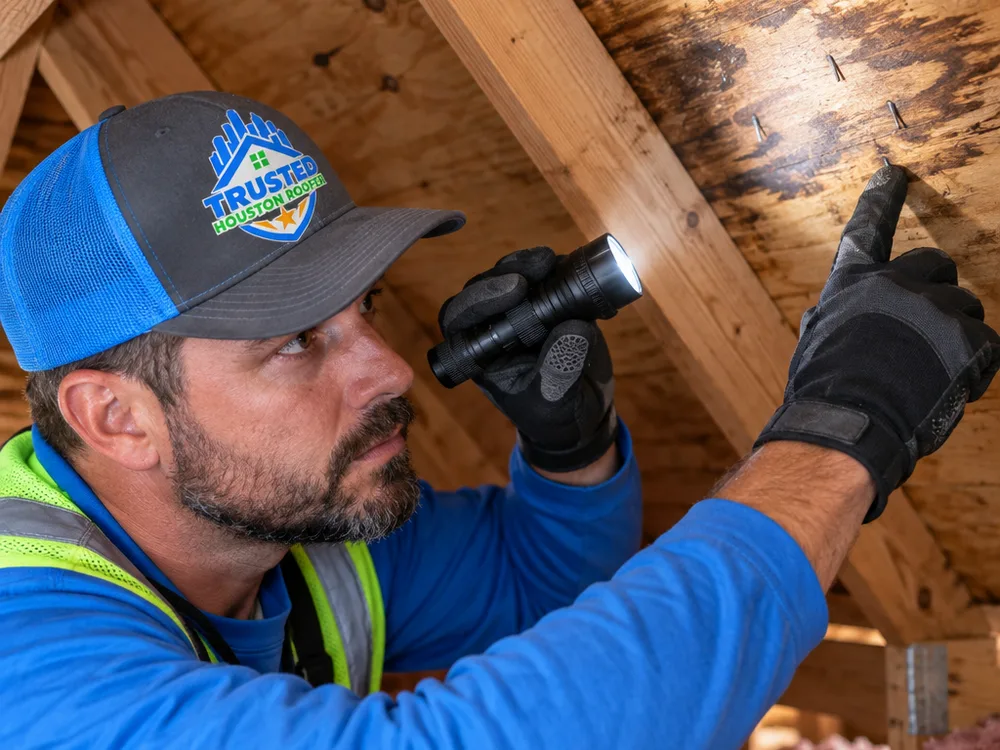
- Interior clues before stepping on the roof: Ceiling staining patterns, bubbling paint, damp drywall seams, and whether the problem shows after wind-driven rain. If accessible, the attic may reveal darkened decking, wet insulation, rusted nail tips, or water tracks along framing.
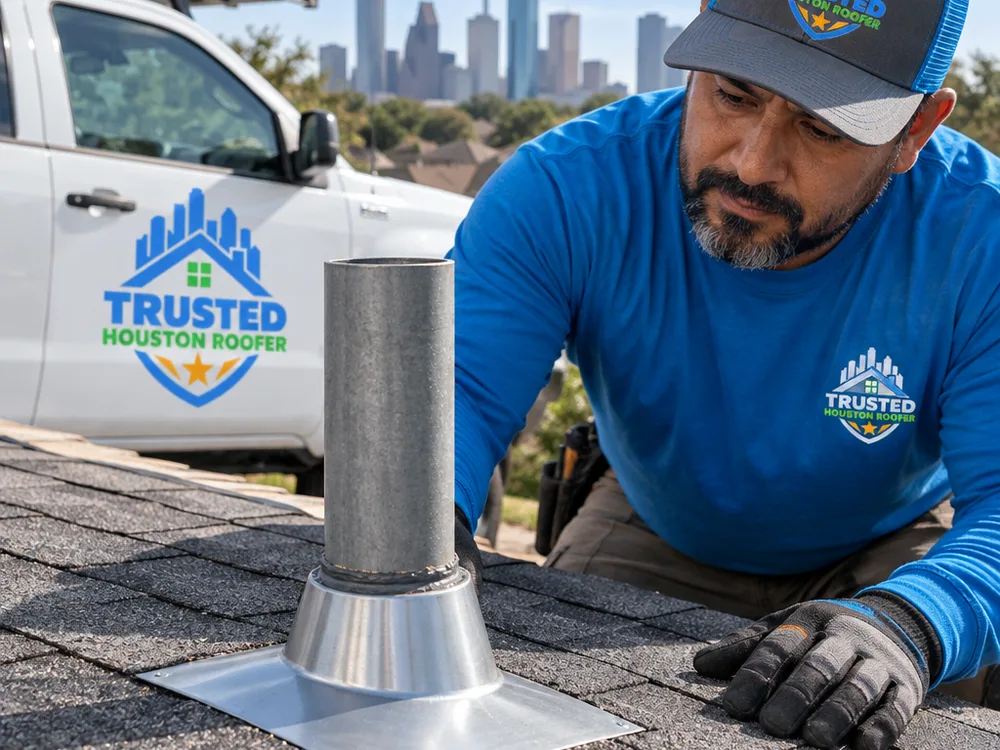
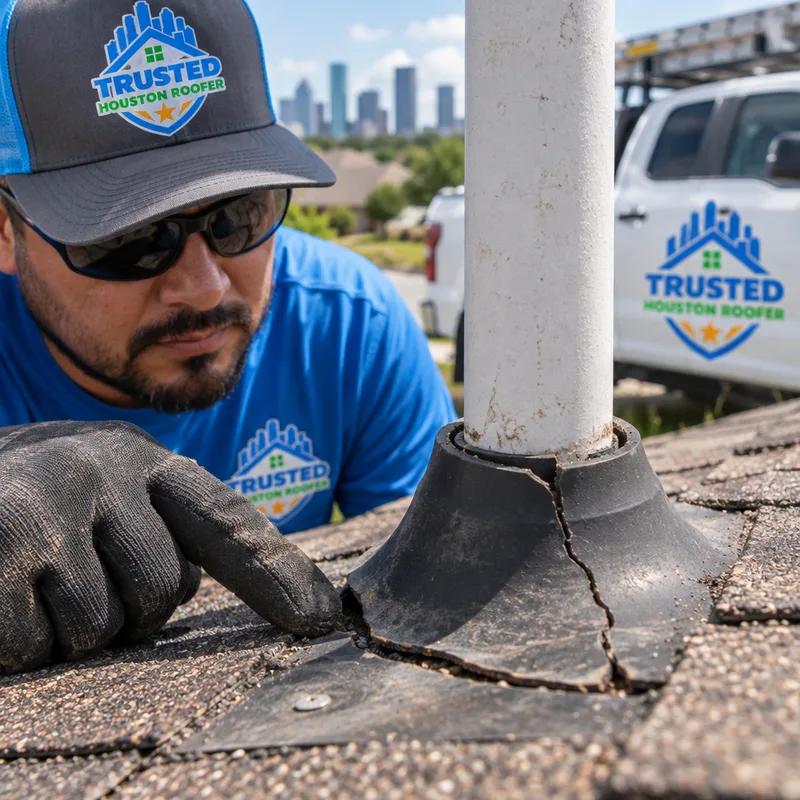
- Roof penetrations and transitions: Plumbing vent boots, furnace or water-heater vents, skylight curbs, satellite mounts, and changes in roof plane. Worn collars, separated sealant, or flashing that no longer sheds water can allow entry.
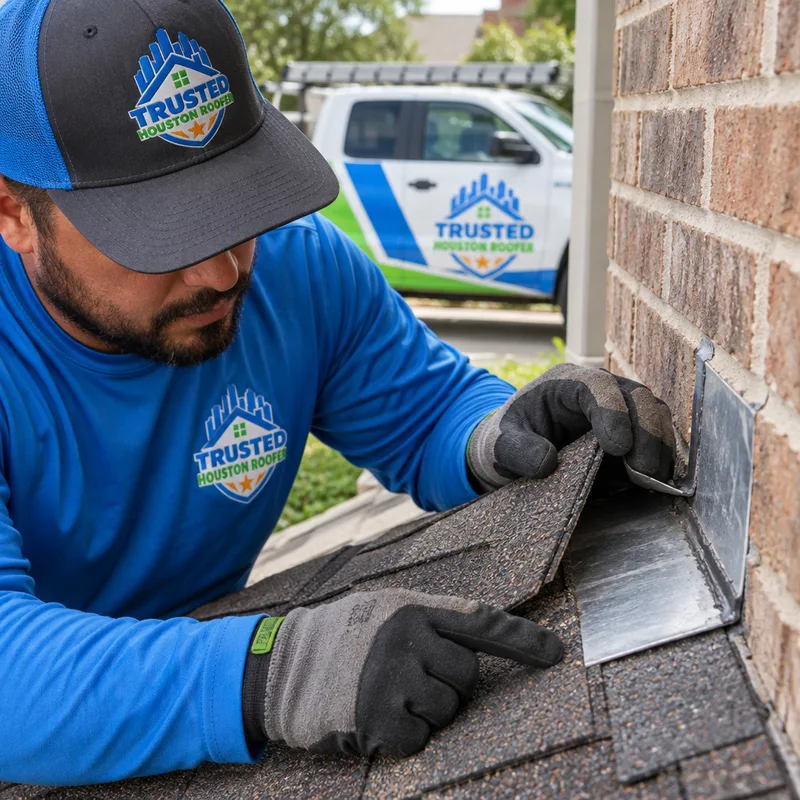
- Flashing at walls and edges: Step flashing, headwall and chimney flashing, and drip edge at eaves and rakes. Small gaps can pull in water during storms.
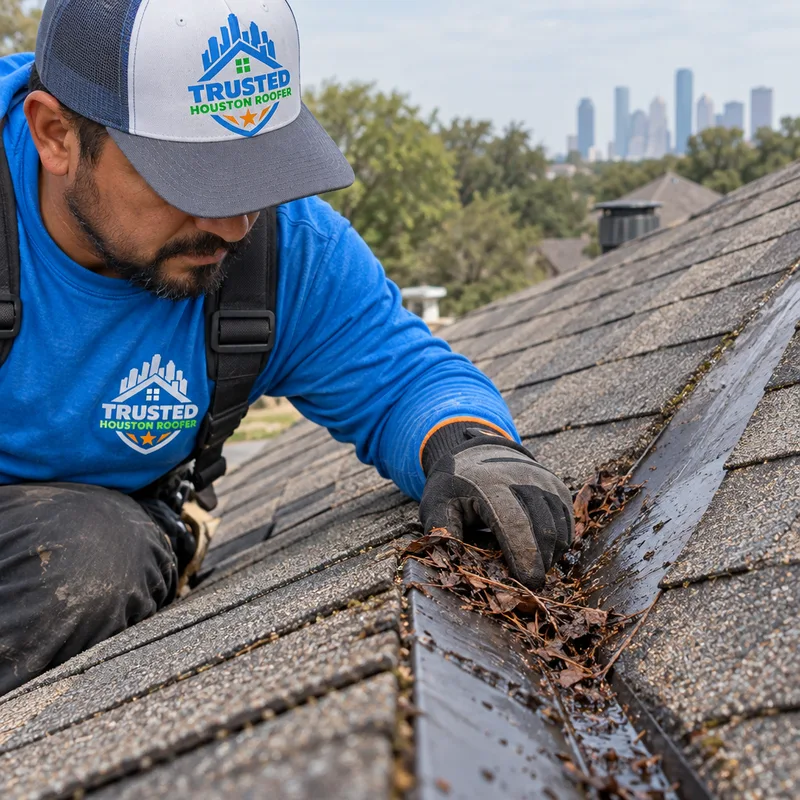
- Valleys and dead-flow areas: Debris, lifted shingles, or punctured valley metal can create an easy path for water. Low-slope tie-ins and areas behind dormers also deserve attention.
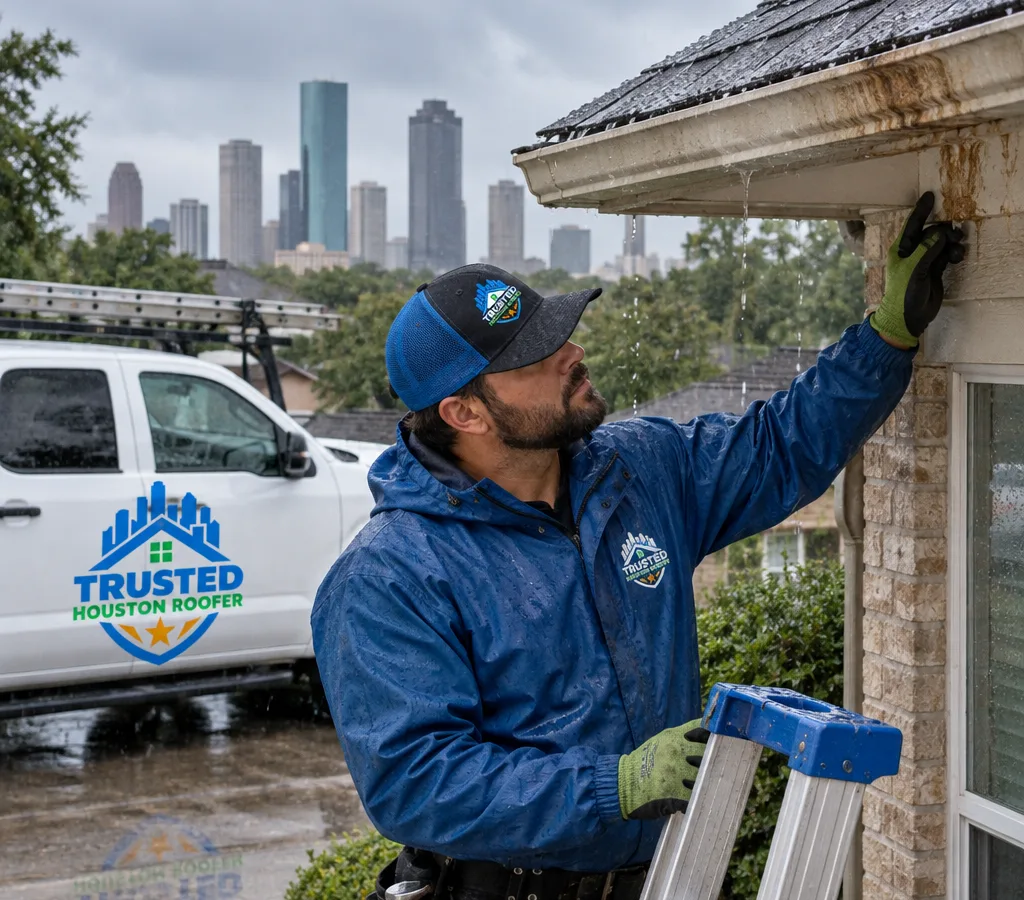
- Drainage and overflow points: Gutters, downspouts, fascia, eaves, and roof-to-wall intersections matter during heavy rain. Overflow can resemble a roof-covering failure from inside the home.
Houston's weather adds two complications: gusty storms that push water sideways and high humidity that can make condensation look like a roof leak. A contractor can compare water paths and timing to help distinguish roof entry from HVAC or bathroom-fan moisture.
If you want broader context, roofing services in Houston explains how roof systems and common repair types fit together.