Installation scope
What a Houston TX gutter installation includes
Gutters installation in Houston is about controlling roof runoff so it lands where it should, instead of pouring next to the foundation, cutting ruts in landscaping, or staining siding. A proper install starts with the roof edge and ends at a safe discharge point.
Here's what a contractor typically plans and installs:
- Gutter type and size: Many homes use K-style gutters, but half-round and box gutters come up on certain rooflines and commercial edges. Size choices depend on roof area and how many downspouts can be placed cleanly.
- Pitch and outlet placement: Gutters must slope toward downspouts. Too little slope leaves standing water and debris; too much can look uneven along the fascia.
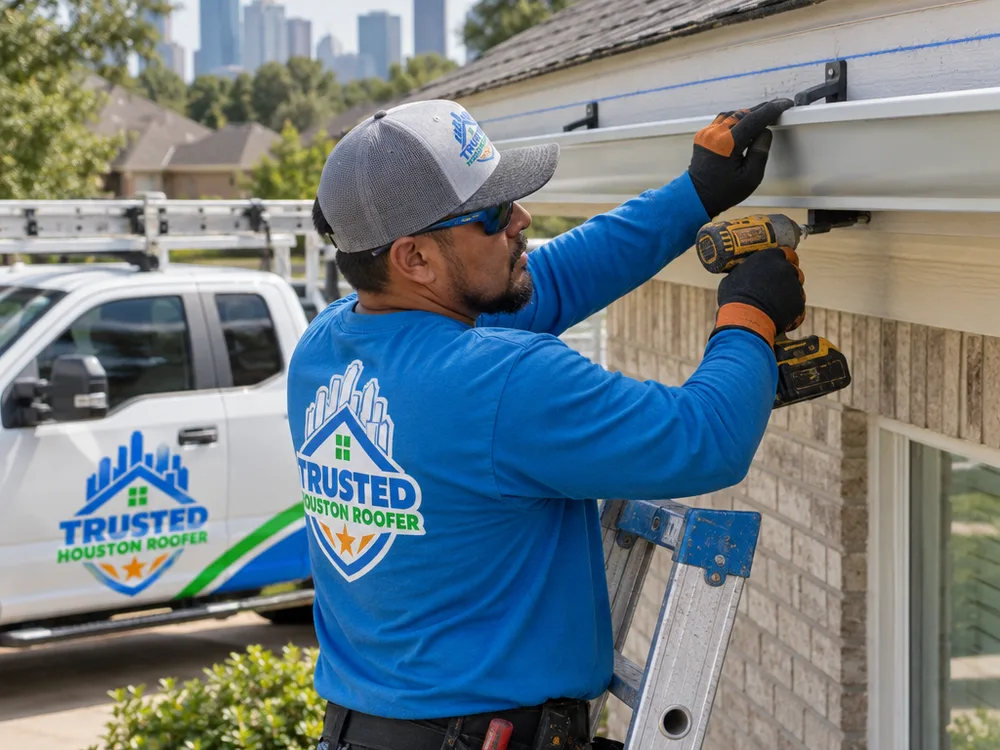
- Hangers and fasteners: Modern hidden hangers are common. The installer checks the fascia condition so fasteners bite into solid wood and don't pull out after a few storms.
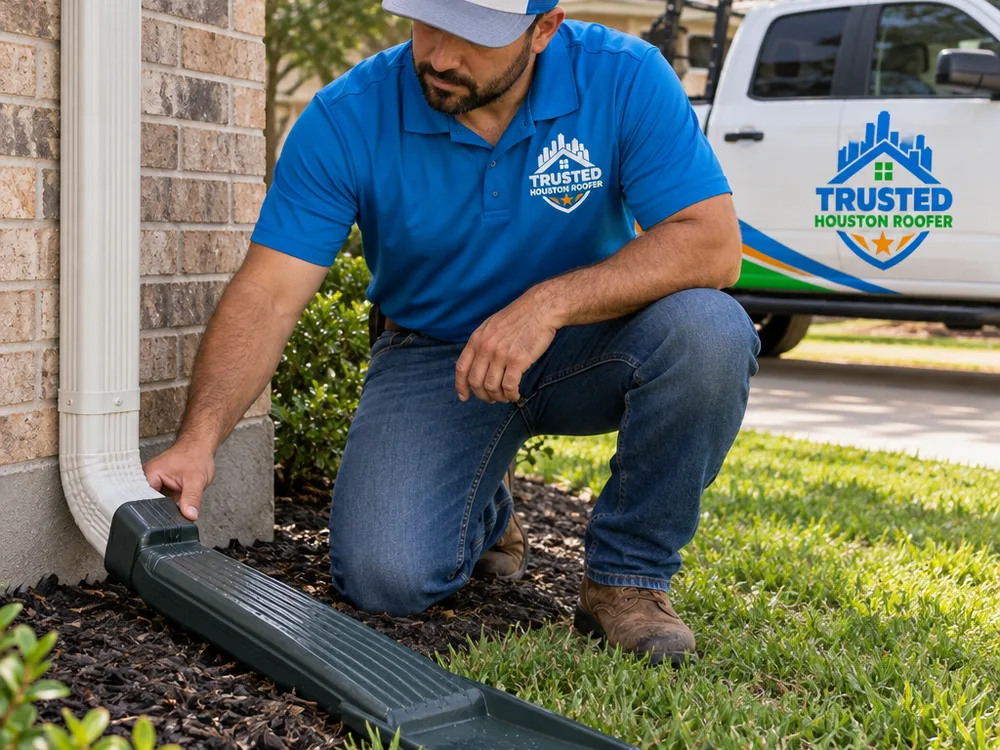
- Downspouts and elbows: Downspouts are laid out to reduce overflow at corners and valleys. Elbows are chosen to clear eaves and land where extensions or drains can carry water away.
- Discharge path: In Houston, a big part of a good plan is where the water goes after the downspout. Some properties use surface extensions; others tie into an underground drain system. Your contractor can explain what fits your lot and grading.
Because Houston gets heavy rain events, small layout choices matter. Adding a downspout near a problematic roof valley or choosing a larger profile on a big roof plane can reduce spillover without changing the look of the home.
If you're trying to coordinate exterior work, it helps to think about the roof edge as a system. When gutters are being installed because the roofline or drip edge changed, it can be useful to discuss the roof scope too, and roofing services in Houston can be part of the same conversation with the contractor you connect with.