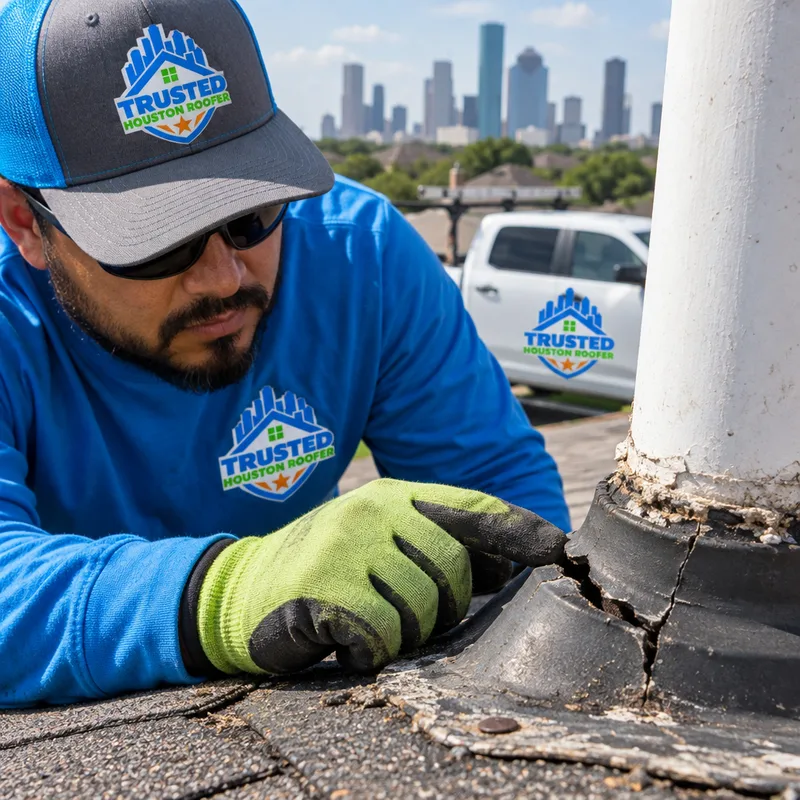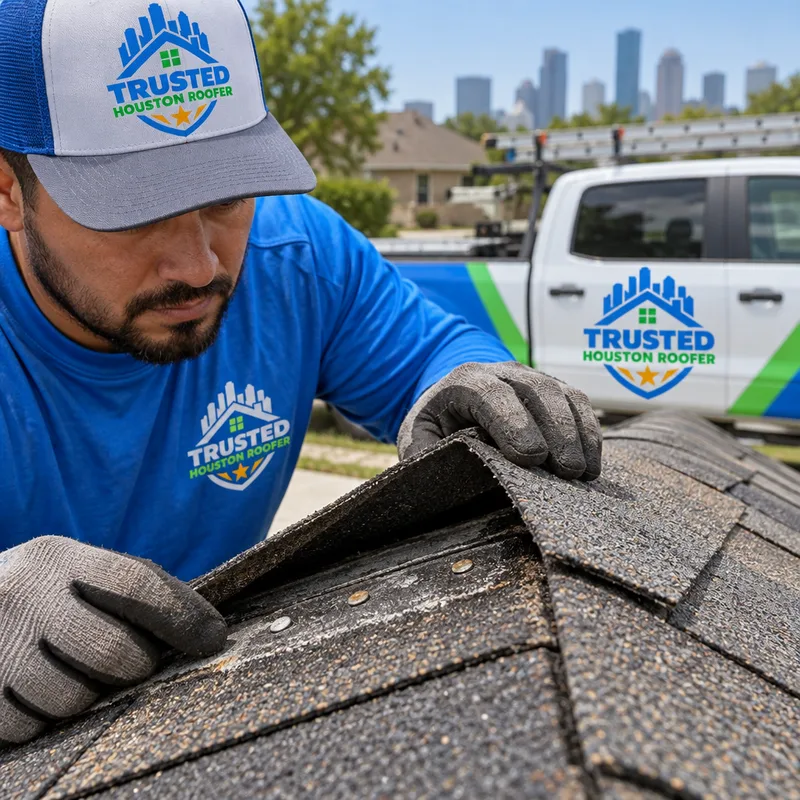
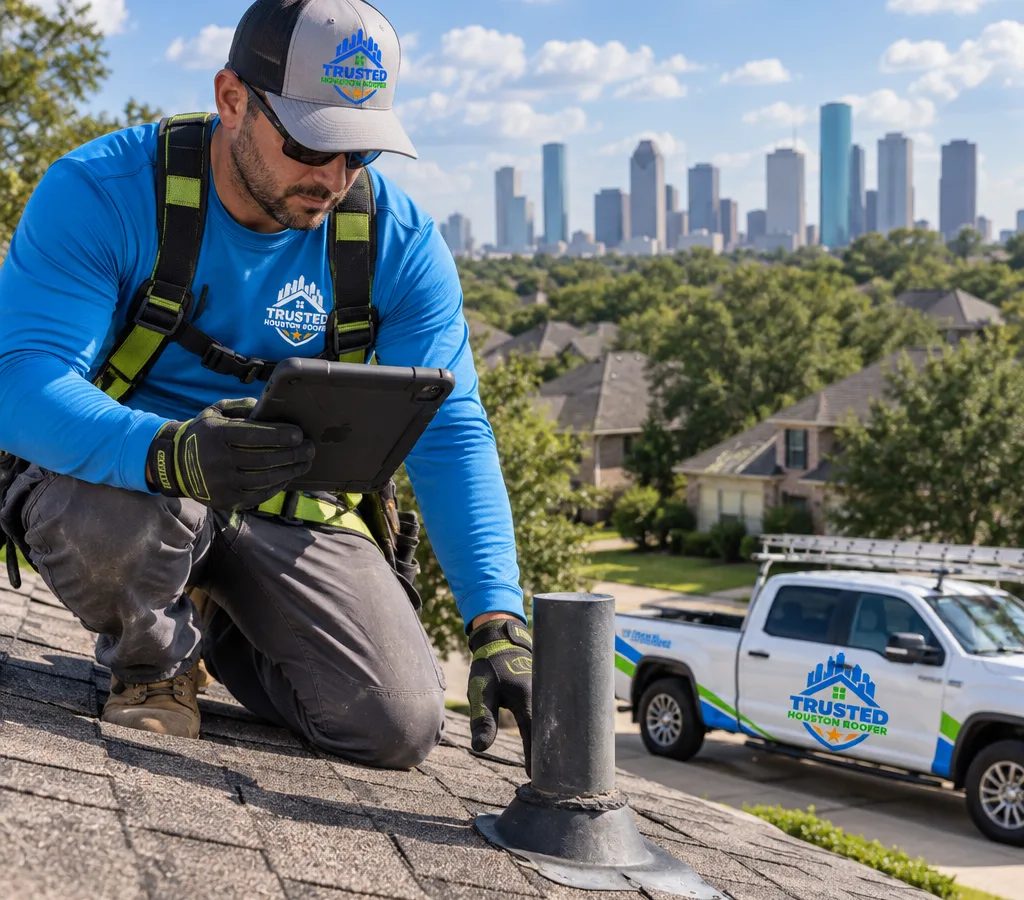
Contractor conducting a roof inspection on an asphalt shingle roof near flashing and roof penetrations
INSPECTION

Roof inspection · Houston, Texas

Roofing Inspection Houston

Describe what you're seeing once and get connected with a local roof inspector who can evaluate the roof and explain the next steps.

✓Describe the roof concern once ✓Local Houston roof inspector ✓Speak directly with the contractor ✓You decide what happens next

Inspection scope

What a roof inspection covers (and what you get back)
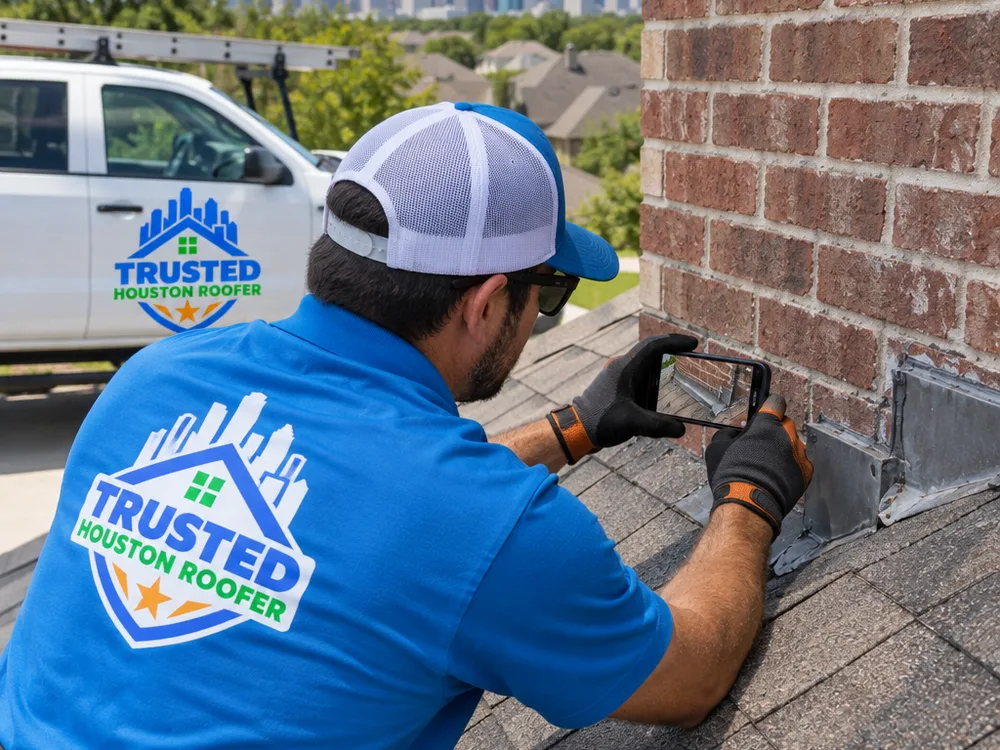
Roof inspector checking and photographing step flashing where a roof meets a brick wall
Flashing at walls and chimneys is a common leak source.

A roofing inspection in Houston is a condition check of the roof system, not just a quick look at shingles. The goal is to identify active leaks, storm-related damage, and wear that could turn into a leak, then document it in a way you can act on.

When you call Trusted Houston Roofer, you describe the situation once—leak location, recent storms, and age of the roof if known—and we connect you with a local contractor who handles roof inspections Houston homeowners rely on.

Here's what a thorough roof inspection Houston contractors typically perform includes:

  • Roof covering condition: Asphalt shingles, metal panels, tile, modified bitumen on low-slope areas, or a mix. Inspectors look for missing tabs, lifted edges, granule loss, rust, punctures, displaced tiles, and signs of poor repairs.
  • Flashing and transitions: Valleys, wall-to-roof flashing, step flashing at sidewalls, counterflashing at masonry, drip edge at eaves and rakes, and pipe boots around plumbing vents.
  • Roof penetrations and accessories: Exhaust vents, skylights, attic vents, satellite mounts, and fasteners that may have backed out.
  • Gutters and drainage: Clogs, improper slope, overflow stains at fascia, and whether runoff is being carried away from the house.
  • Deck and structure clues: Visible soft spots, sagging lines, and interior indicators that suggest deck or framing issues.
  • Attic or ceiling indicators: When accessible, water staining, wet insulation, daylight at penetrations, and ventilation concerns.

What you should expect at the end: clear photos, notes about where issues were found, and a plain-language explanation of what is maintenance, what is repair-worthy, and what may call for further evaluation. If the inspector recommends repair, you'll talk with the contractor directly about scope and timing.

If you're dealing with broader roofing decisions, roofing in Houston TX often starts with an inspection so you're not guessing which direction to go.
Reasons to inspect

Why homeowners call for roof inspections in Houston

✓

After a strong storm

Wind can lift shingles and hail can bruise or crack roofing materials. An inspection focuses on damage patterns and vulnerable ridges, hips, valleys, and flashing.

✓

Active leak or ceiling stain

Water can travel along decking and rafters before it appears inside. A roof inspector traces likely entry points and checks attic clues when access allows.

✓

Buying or selling a home

An inspection helps clarify remaining service life, how repairs were handled, and whether there are signs of ongoing moisture problems.

✓

Flat or low-slope sections

Patios, porches, and additions often have low-slope roofs where drainage and seams matter more than shingle condition.

✓

Roof age and general wear

Granule loss, exposed fasteners, cracked pipe boots, and failing sealant often appear before a leak. Finding them early can help limit interior damage.

One-call process

How getting connected works

01

Tell us what's going on

Share the roof type if you know it, what you're seeing, and whether you can safely access the attic.

02

We connect you with a local contractor

Trusted Houston Roofer routes your call to an independent contractor who serves Houston and handles roof inspections.

03

The contractor inspects and documents findings

The roof inspector checks key areas, takes photos, and explains what appears to be maintenance, repair, or something needing deeper evaluation.

04

You decide what to do next

If repairs are recommended, you discuss scope directly with the contractor and choose whether to move forward.

If you're seeing a stain, a drip, or shingles out of place, a roof inspection can turn guesswork into a clear plan. Describe it once and get connected with a local roof inspector.

CALL NOW: (713) 715-1607

Inspection details

What roof inspectors look at up close

Clean roof edge with drip edge, starter course, and gutters aligned for drainage
Edge details affect both water control and shingle performance.
Asphalt shingle roof valley showing granule wear and debris buildup
Valleys handle heavy water flow and deserve careful inspection.
Cracked rubber pipe boot around a plumbing vent with deteriorated sealant
Pipe boots often fail before shingles do.
Lifted shingles near a roof ridge with an exposed nail line and minor creasing
Wind lift at ridges and edges can lead to leaks in driven rain.

Homeowner questions

Roof inspection questions Houston homeowners ask

What should I tell you on the phone so the right roof inspector is connected?+

Start with what prompted the call, the roof type if you know it, and where the issue shows up inside. Helpful details include the approximate roof age, whether there are multiple roof sections, and whether attic access is available.

How does a roof inspector find the source of a leak when the stain is far from the roofline?+

A roof inspector looks first at likely entry points such as penetrations, flashing, valleys, and roof-to-gutter edges. Water can enter high and travel along decking or framing, so attic clues and moisture patterns matter as much as the ceiling stain.

Can roof inspections be done without walking on the roof?+

Often, yes. Contractors may use ladder-edge checks, ground observations, attic inspection, and photo documentation with zoom or other tools, depending on roof height, pitch, and condition. The contractor can explain the appropriate access method.

What are common trouble spots during a Houston roof inspection?+

Common focus areas include pipe penetrations, flashing at sidewalls and chimneys, valleys where debris collects, and roof edges where wind can lift shingles. Gutters and downspouts also matter because overflow can soak fascia, decking edges, and siding.

What's the difference between storm damage and normal wear?+

Storm damage often appears as localized impact marks, creased or torn shingles from wind lift, or displaced materials in directional patterns. Normal wear is more gradual, such as broad granule loss, brittle shingles, sealant breakdown, or corrosion.

I searched for a low-cost roof inspection in Houston. What should I ask about before scheduling?+

Ask what the inspection includes, what documentation you'll receive, and whether the contractor can inspect the attic when accessible. Also ask how follow-up works if the inspection indicates a repair is needed.

Do roof inspections in Houston include the attic?+

They can, when attic access is available and conditions allow. Attic checks help clarify whether staining is old or active and whether ventilation or duct issues are contributing to moisture.

Will the contractor who inspects also be able to do repairs if needed?+

In many cases, yes. After the inspection, you can talk directly with the contractor about appropriate repairs, materials, and work sequence so you can decide whether to proceed.

INSPECT

Your next step

Ready to get the roof checked?

A clear inspection report starts with a simple call. Describe what you've noticed once, and Trusted Houston Roofer will connect you with a local contractor who performs roof inspections in Houston.

CALL NOW: (713) 715-1607

Service Area

Proudly Serving Houston & Surrounding Areas